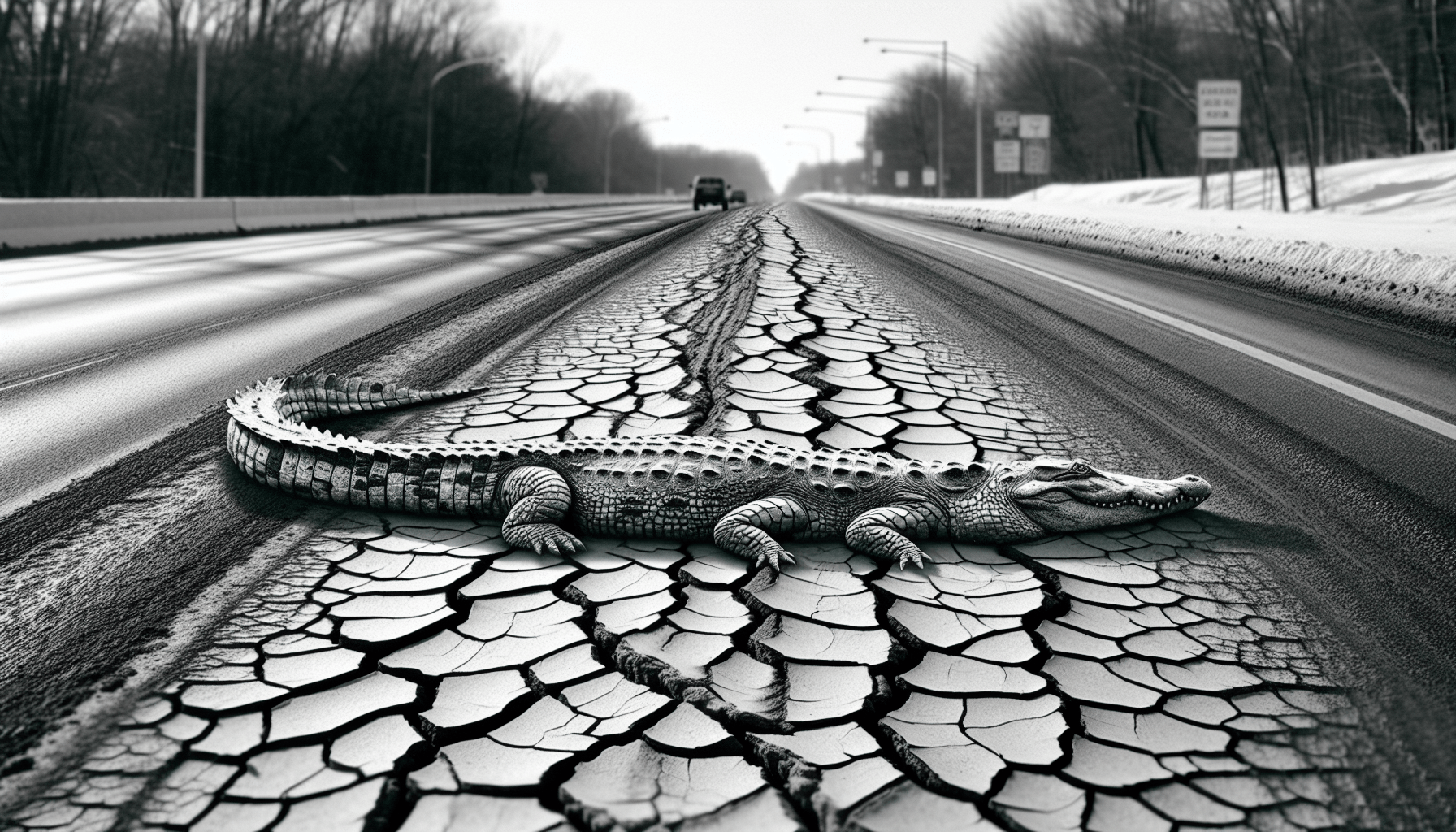
Crocodile Cracking” serves as an insightful examination into the comprehensive road repair solutions offered by Jetpatcher South Africa. Utilizing a pioneering four-stage process, Jetpatcher effectively addresses a multitude of road surface issues, including the intricate problem of crocodile cracking. The method employs a high-volume blower, specially formulated bitumen emulsion, and an asphalt aggregate mix to meticulously clean, seal, compact, and complete repairs. Renowned globally for its reliability and efficiency over the past four decades, Jetpatcher’s advanced technology not only delivers durable and cost-effective fixes but also significantly prolongs the service life of road infrastructures. Have you ever wondered why roads often deteriorate faster than they should, even with regular maintenance? One common form of road damage that many of us encounter is known as “Crocodile Cracking.”


What is Crocodile Cracking?
Crocodile cracking, also known as alligator cracking, is a distress pattern on the road surface that resembles the scales of a crocodile. This condition typically manifests as interconnected cracks on the asphalt pavement and signifies underlying structural issues. These cracks are not merely surface blemishes; they represent significant degradation that compromises the integrity and safety of the roadway.
How Does Crocodile Cracking Form?
Crocodile cracking essentially forms due to repetitive stress applied to the pavement, culminating in fatigue failure. Factors contributing to this include:
- Load Stress: Repeated heavy traffic loads over time can cause the asphalt to flex and eventually fracture.
- Subgrade Weakness: A poorly constructed or weak subgrade does not adequately support the pavement layers, leading to deformation.
- Poor Drainage: Water infiltration erodes the pavement structure, leading to reduced support and increased susceptibility to cracking.
- Temperature Fluctuations: Extreme temperature changes cause expansion and contraction of the pavement material, further exacerbating stress on the road surface.
The Importance of Addressing Crocodile Cracking
Neglecting crocodile cracking can propagate more severe road failures. Addressing these issues promptly can prevent further damage, enhance road safety, and optimize repair costs. proactive road maintenance ensures a smoother, safer driving experience and prolongs the lifespan of the road infrastructure.
Safety Concerns
Crocodile cracks accelerate the deterioration process, leading to larger potholes and potentially hazardous driving conditions. Vehicles driving over cracked surfaces experience less traction and stability, increasing the risk of accidents. For pedestrians and cyclists, these cracks can become significant tripping hazards.
Economic Implications
For municipalities and road maintenance authorities, untreated crocodile cracks can escalate repair costs. Early intervention helps curb expenditures on more substantial, extensive repairs by tackling problems at their inception. Economically, maintaining road quality supports local commerce by ensuring that goods and services can move efficiently.


Jetpatcher Technology: A Modern Solution
Jetpatcher South Africa employs state-of-the-art road repair technology, offering an effective solution for tackling crocodile cracking and other forms of road damage. By leveraging a unique four-stage process, Jetpatcher technology not only remedies current road failures but also extends the longevity of road surfaces.
The Four-Stage Process of Jetpatcher Technology
Jetpatcher uses an innovative and efficient repair system consisting of the following stages:
1. Cleaning
The initial stage involves the use of a high-volume blower that completely cleans the damaged area. This step is crucial as it removes all dirt, debris, and loose materials, ensuring a clean surface for effective adhesion.
2. Sealing
Next, specially formulated bitumen emulsion is applied to seal the cracks and prevent water ingress. This emulsion acts as a binder, offering a sturdy foundation for the subsequent asphalt aggregate mix.
3. Filling and Compacting
The cleaned and sealed cracks are then filled with a mix of asphalt aggregate designed for durability and resistance to wear and tear. The Jetpatcher system compacts these materials efficiently, ensuring that the repaired areas are as stable as the original pavement.
4. Finishing
Finally, a surface finish is applied, leaving a seamless, smooth area that blends with the surrounding pavement. This stage includes any necessary curing and setting, ensuring that the repair can withstand regular traffic use almost immediately.
Advantages of Using Jetpatcher Technology
Jetpatcher technology provides a comprehensive approach to road repair, ensuring that surfaces are fixed efficiently and reliably. Here are the key benefits:
- Durability: Repairs are long-lasting, significantly reducing the need for frequent maintenance.
- Efficiency: The process is streamlined, making for quick repairs that minimize road closure times.
- Cost-effective: Due to the technology’s efficiency and durability, costs over time are reduced.
- Environmentally Friendly: The process uses fewer raw materials and energy, promoting sustainability.
Understanding Pavement Structures and Materials
It’s essential to understand the components and materials involved in road construction to contextualize why and how crocodile cracking occurs, and how it can be repaired effectively.
Pavement Layers
Typical pavement structures consist of several layers, each contributing to the overall strength and functionality of the road:
- Surface Course: The top layer, usually made of asphalt, provides a smooth driving surface and protection from the elements.
- Base Course: This layer supports the surface course and distributes traffic loads.
- Sub-base Layer: A secondary load-bearing layer that also aids in drainage.
- Subgrade: The soil layer providing foundational support.
Common Materials
- Bitumen: Used as a binding material due to its adhesive and weather-resistant properties.
- Aggregates: Various sizes and types are used to provide structural layers and improve durability.
- Emulsions: Mixtures used for sealing and binding purposes during repairs.
The Role of Preventive Maintenance
While focusing on fixing crocodile cracks is crucial, preventive maintenance plays an equally important role in extending the life of pavements. Preventive strategies can delay the onset of cracking and other forms of road distress.
Routine Inspections
Regular road inspections help identify early signs of distress before they escalate. This proactive approach allows for timely interventions, significantly reducing the frequency and cost of repairs.
Maintenance Techniques
- Seal Coating: Applying a protective layer to prevent water infiltration and surface oxidation.
- Crack Sealing: Filling and sealing small cracks to prevent them from widening.
- Surface Treatments: Using materials like slurry seal or micro surfacing to restore the surface texture and improve skid resistance.
Integrated Asset Management
Adopting an integrated asset management approach ensures a comprehensive view of the entire road network, facilitating better planning and resource allocation for maintenance activities. Advanced software tools and data analytics can forecast degradation trends, enabling more effective and timely maintenance interventions.
Case Study: Jetpatcher Effectiveness in South Africa
To illustrate the impact of Jetpatcher technology, consider a case study from South Africa. Municipalities across the country faced escalating costs due to frequent road repairs necessitated by crocodile cracking and other forms of road distress.
Project Scope
- Region: Multiple regions across South Africa
- Issues: Predominant crocodile cracking, potholes, and edge breaks
- Objective: Implement Jetpatcher technology to address these road failures effectively and evaluate its impact on repair frequency and cost reduction.
Results
After deploying Jetpatcher technology, municipalities reported:
- Reduction in Repair Frequency: The durable repairs significantly decreased the need for repeated interventions.
- Cost Savings: Overall maintenance budgets saw notable reductions due to fewer and less extensive repair operations.
- Improved Road Safety: Enhanced road conditions reduced accidents and vehicle damage complaints.
This case study exemplifies how adopting advanced road repair technologies can yield substantial benefits in road maintenance management.
Challenges in Road Maintenance
While advancements like Jetpatcher technology offer powerful solutions, road maintenance is not without its challenges. Various factors can complicate the maintenance and repair efforts.
Financial Constraints
Budget limitations often lead to deferred maintenance, which can exacerbate road damage. Solutions must balance cost-efficiency without compromising the effectiveness and quality of repairs.
Environmental Factors
Weather conditions significantly influence road durability. Excessive rain can lead to subgrade weakening, while extreme heat can amplify surface wear. Addressing these factors requires tailored materials and strategies suited to specific environmental conditions.
Traffic Management
Repair activities often necessitate road closures or diversions, causing inconvenience to travelers. Efficient, quick-turnaround solutions are imperative to minimize traffic disruptions and maintain user satisfaction.
Conclusion
Crocodile cracking is more than an aesthetic issue—it’s an indicator of underlying structural compromise that demands attention. Leveraging innovative technologies like Jetpatcher can significantly enhance the efficacy and durability of road repairs. By understanding the causes of crocodile cracking and employing advanced maintenance strategies, you contribute to extending the lifespan of the pavement, ensuring safety, and optimizing repair costs.
By staying informed and proactive in road maintenance efforts, you play a critical role in maintaining the integrity of road infrastructures. Adopting modern technologies such as Jetpatcher can mitigate the challenges posed by crocodile cracking, promoting safer and more efficient transportation networks for all users.